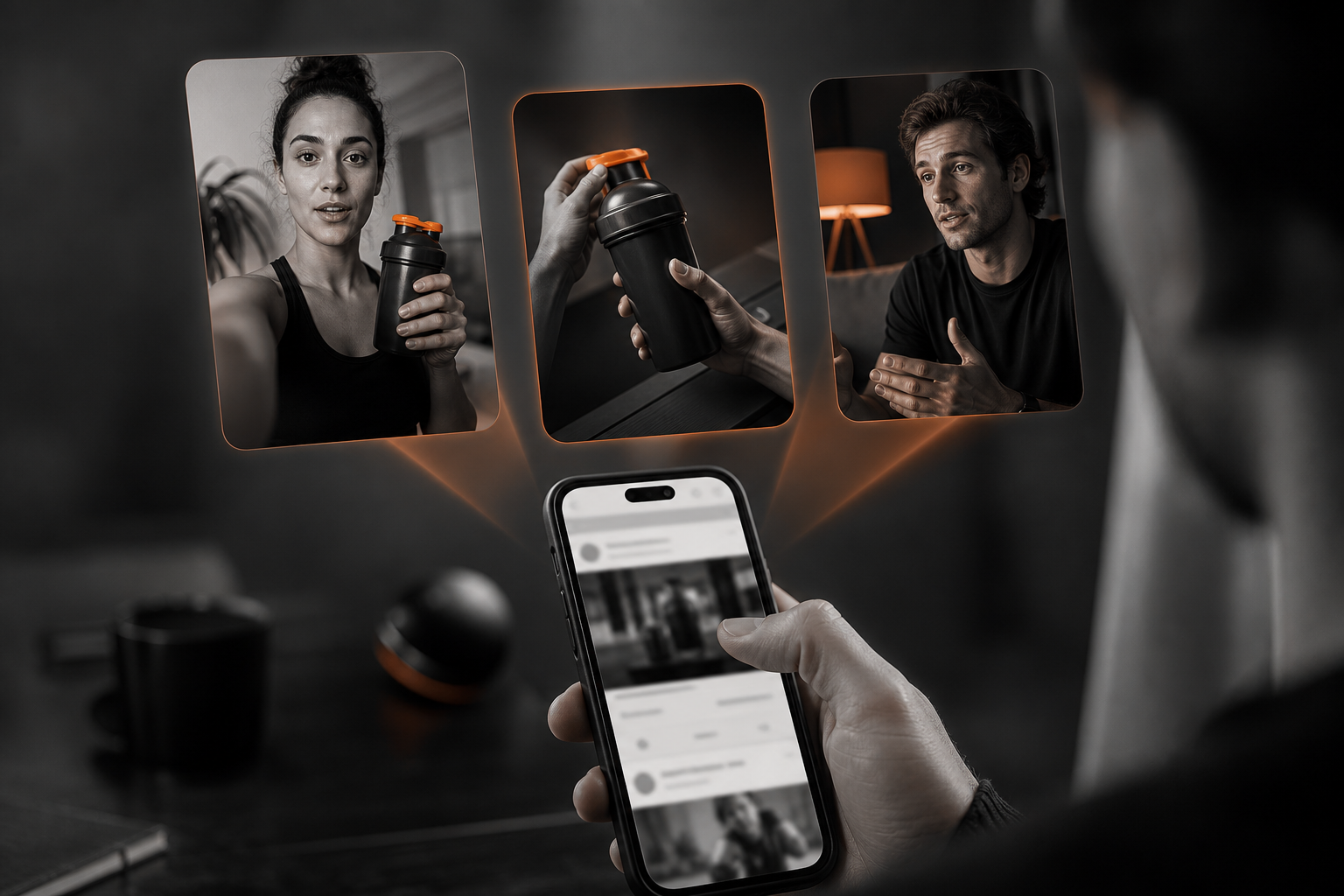
Run the Meta ads 3-ad test to beat fatigue and learn fast: launch exactly three creatives—UGC, demo, testimonial—each with a hook-first 3-second open and one clear benefit. Test them on broad with the same copy and offer. Track thumbstop and CTR All, promote the clear winner, and cut laggards quickly. This keeps costs stable and creative learning clean.
Why a 3‑ad test beats 20 variants
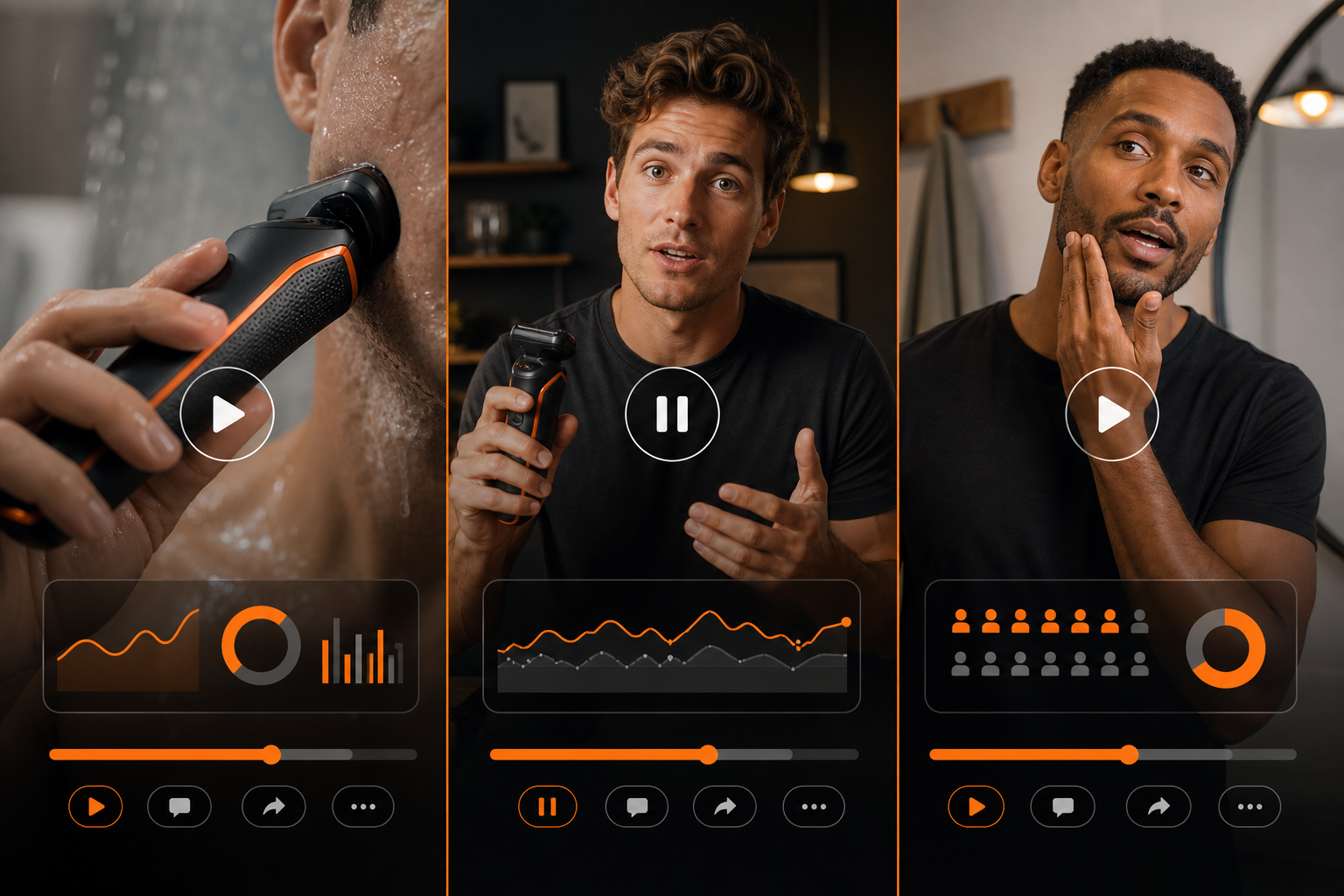
Key definitions to align your team:
- Thumbstop rate: The percentage of impressions that convert to at least a 2–3 second hold. Higher early hold predicts stronger downstream engagement.
- Hook: The first 3 seconds of your creative—the split-second reason to stop the scroll.
- Creative fatigue: Performance decline from audience overexposure to the same ad.
- Clean read: A test where creative, not targeting or offer changes, explains the performance difference.
Trend signal: Multiple 2024–2026 tutorials and breakdowns on Meta Ads (by creators like Alex Hormozi, Hostinger Academy, Sabri Suby, and others) are converging on creative quality and early hold as the decisive levers. Treat this as directional guidance, not proof of a single “right” setup.
For deeper tactics on visuals and copy that consistently perform, see Winning Meta Ads Creatives: https://orangeandblackdigitals.com/blog/winning-meta-ads-creatives/
The 3‑ad test blueprint for 2026
1) UGC (creator POV)
- Goal: Relatable peer influence; “people like me use this.”
- Format: Self-shot vertical, conversational tone, fast cuts.
- Benefit example: “Stops breakouts in 48 hours” becomes “Visible clarity fast.”
2) Product Demo (hands-on)
- Goal: Competence and proof through usage.
- Format: Over-the-shoulder unbox/use, screen capture, before/after sequence.
- Benefit example: “5‑minute setup” shown step-by-step.
3) Testimonial (customer clip)
- Goal: Social proof and outcomes.
- Format: Real customer snippets, quick quote montage, a concise result.
- Benefit example: “Cut my delivery time in half.”
Pillars for every ad:
- Hook-first framing for the first 3 seconds
- One benefit per creative (no stacking)
- Rotate winners into broad; kill laggards fast
Related setup tips for budgets and bidding are summarized in Abo Vs Cbo Meta Ads Simple Starter Structure: https://orangeandblackdigitals.com/blog/abo-vs-cbo-meta-ads-simple-starter-structure/
Hook-first framing: win the first 3 seconds
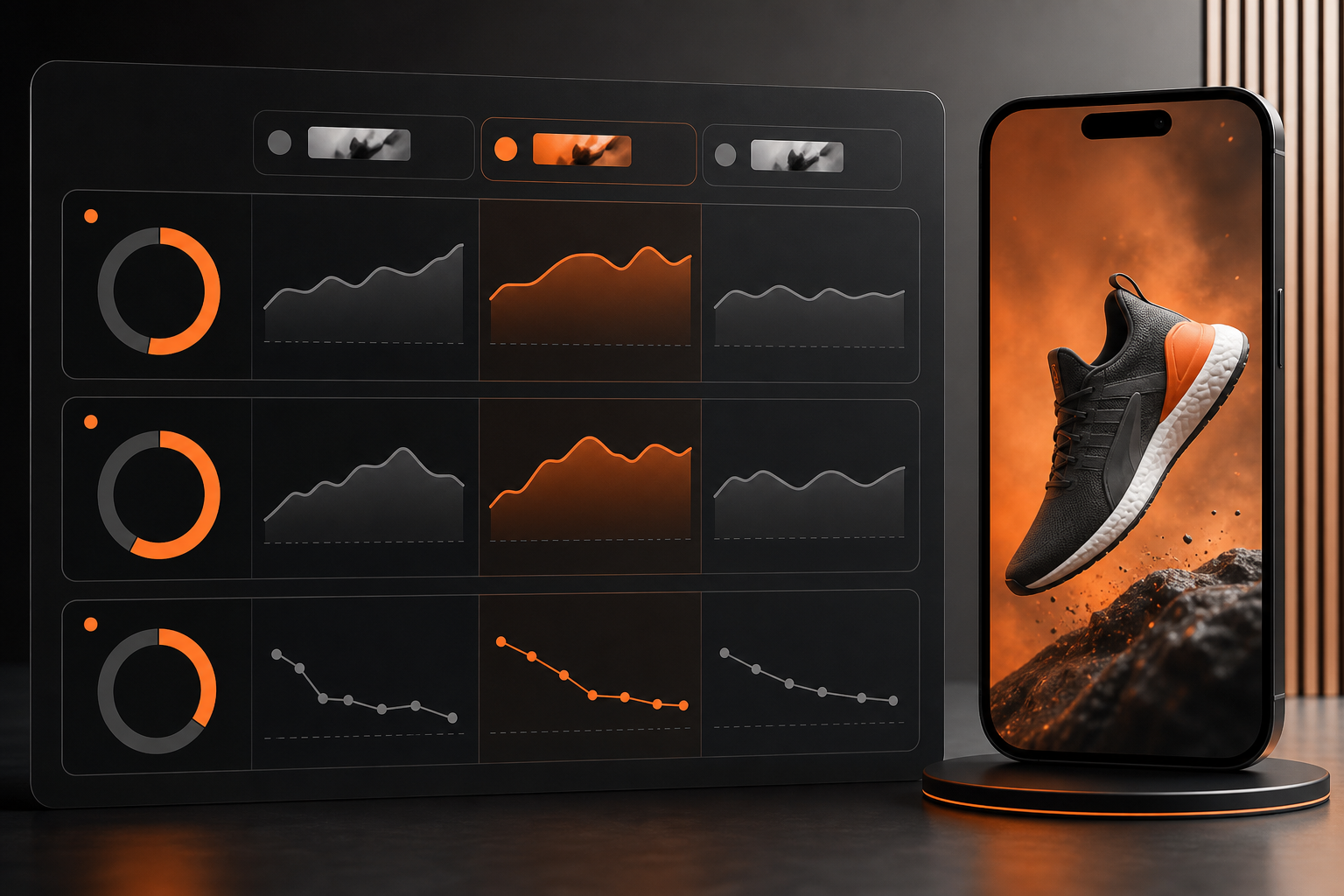
Hook patterns to test:
- Pattern break: Unexpected visual (close-up texture, bold motion, unusual angle)
- Outcome-first: “This fixed my [pain] in 48 hours.”
- Objection flip: “Don’t buy this if you want a quick fix.”
- Time-lapse/quick reveal: Before → after in the first second
- Creator clapback: “You said this wouldn’t work—watch this.”
Execution notes:
- Use native-feeling motion and sound that match Reels/Stories norms.
- Show the product within the first second.
- Subtitle key words; keep captions punchy.
- Keep brand elements light; over-branding can feel like an ad and lower hold.
One benefit per creative: maximize learnings
How to choose benefits:
- Pull your top outcome claims from reviews, support tickets, and high-intent search terms.
- Map benefits to common first-time buyer objections (speed, ease, proof, risk-reversal).
- Assign benefit-to-format logically: Social proof-heavy claims to Testimonial, functional claims to Demo, lifestyle outcomes to UGC.
Copy discipline checklist:
- Headline mirrors the one benefit.
- First line of primary text repeats the promise.
- CTA aligns with that promise (e.g., “See how it works” for demo).
Test structure and budget in practice
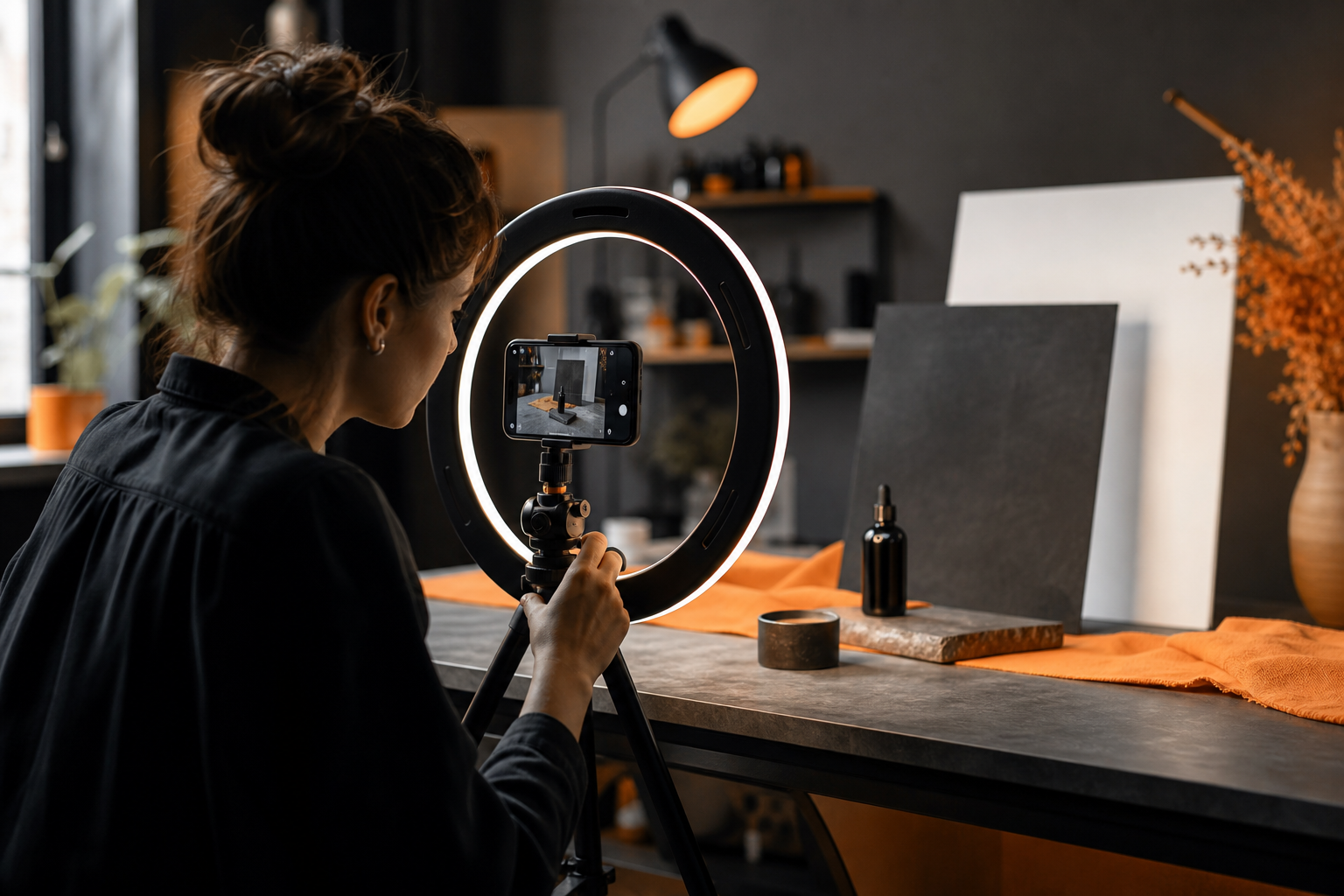
- Campaign type: Use your standard Conversion objective. If you run Advantage+ Shopping, isolate the 3‑ad test in its own campaign or ad set to protect read.
- Targeting: Broad (no interests/lookalikes) to reduce overlap and speed learning.
- Placements: Advantage+ placements; design creatives to be vertical-first.
- Copy: Identical across ads; only the video/visual changes.
- Budget: Sufficient for each ad to gather meaningful impressions and early engagement across a few cycles. Many teams set guardrails using their target CAC; adapt to your risk tolerance.
- Duration: 5–7 days unless a creative is a clear laggard.
For a cross-channel budgeting mindset, see Google Ads Budget And Bidding For Beginners: https://orangeandblackdigitals.com/blog/google-ads-budget-and-bidding-for-beginners/
Measurable checks: how to call winners and losers
Primary signals (early):
- Thumbstop/3-second hold: Do viewers even stay? Compare to your account median.
- Hook-to-25% view: Are people progressing beyond the open?
Commercial signals (mid/late):
- CTR All and Link CTR: Is curiosity converting to clicks?
- CPC or CPM-to-CTR ratio: Efficiency of your creative in the auction.
- CPA/CAC against your target: Ultimate decider over a meaningful sample.
Decision rules you can adopt:
- Protect your read: Keep copy/offer constant for all three ads during the test.
- Promote a winner: If one ad leads across early and commercial signals for multiple days, duplicate into a separate scale ad set or campaign.
- Kill laggards fast: If an ad is trailing both others on thumbstop and CTR for consecutive days and has already had a fair chance to learn, cut it. Don’t rescue with budget.
- Archive fatigue: When a winner’s performance decays notably against its own baseline, retire it and re-iterate the same format with a new hook.
Rotate winners into broad; scale without chaos
Once you have a winner:
- Duplicate the winning creative into your scaling environment (e.g., your main broad ad set or Advantage+ Shopping campaign).
- Keep the creative intact; don’t rewrite copy yet. Let the winner prove itself in the new delivery context.
- Build sister variants one at a time: new hook with the same benefit; or same hook with a different benefit—but only after the original has stable delivery.
- Refresh cadence: Aim for a steady drumbeat of new hooks each week rather than monthly bulk drops. That pace fights fatigue without fragmenting delivery.
For broader 2026 planning across channels and AI-assisted creative workflows, see 2026 Ai Marketing Roadmap: https://orangeandblackdigitals.com/blog/2026-ai-marketing-roadmap/
Creative templates you can swipe
UGC (30–35s) 1) Hook (0–3s): “I thought this would be a waste until…” 2) Problem (3–8s): Quick pain snapshot in first person. 3) Moment of proof (8–18s): Show the product in use; cut to a micro-result. 4) Benefit repeat (18–25s): Restate the single promise. 5) CTA (25–35s): What to do next; keep it native (“Tap to see”).
Product Demo (20–30s) 1) Hook: Before/after timeline flash or speed-run. 2) Step 1–3: Hands-on walkthrough; zoom on key feature. 3) Outcome: Side-by-side or overlay of the result. 4) CTA: “See how it fits your setup.”
Testimonial (20–30s) 1) Hook: One-sentence quote with emotional trigger. 2) 2–3 quick cuts: Different customers finishing the same sentence starter. 3) Proof moment: Unpack a detail that makes the claim believable. 4) CTA: “Join [type of user] switching to [product].”
Limitations and when to deviate
- High-ticket/low-data offers: You may need longer tests or micro-conversion optimization (e.g., add-to-cart) for signal density.
- Regulated categories: Creative claims must stay within compliance; testimonial claims may be restricted.
- Seasonal swings: Big retail moments distort CPMs; lock in winners well ahead or isolate Q4 tests.
- Heavy bundling/promos: Changing offers mid-test pollutes results. Freeze the offer until the test ends.
- Brand control: If strict brand assets reduce native feel, pilot UGC and Testimonial with subtle brand presence rather than heavy logos.
Evidence-led callout: why this works now
How Orange & Black can help run your 3‑ad test
We help DTC teams operationalize this exact workflow with two offerings: Performance marketing and conversion systems, and Analytics and reporting. We’ll stand up a clean testing campaign, create or source UGC, demo, and testimonial variants, and implement a measurement scorecard (thumbstop, CTR All, CAC vs. target) you can trust. Then we build the refresh cadence—weekly hook sprints and winner rotation—so scaling doesn’t break your CPA. Ready to make your Meta creative system repeatable? Talk to us: https://orangeandblackdigitals.com/#contact
PS: If you coordinate content across channels, Topiclicks is an agentic AI platform for omnichannel content planning and execution, built for brands and product teams focused on generating revenue and conversions. It can help you brief creators, track hooks, and schedule refreshes: https://topiclicks.com/
Step-by-step: your 7‑day 3‑ad test plan
- Choose one clear offer and landing page. Freeze it.
- Write one set of copy. Keep it constant.
- Outline three creatives (UGC, demo, testimonial) with one benefit each.
Day 1: Launch
- Campaign objective: Conversions. Broad targeting. Advantage+ placements.
- One ad set, three ads. Even delivery to start.
Days 2–3: Early reads
- Check thumbstop and Hook→25% progression. Kill any ad far below your account’s typical early engagement and clearly trailing the other two.
Days 4–5: Commercial reads
- Compare CTR All, CPC, and early conversion trend. If one ad now leads clearly, duplicate it into a separate ad set for incremental budget.
Days 6–7: Decide
- Promote the winner to your scaling environment.
- Archive laggards to avoid re-serving in future learning.
- Brief next week’s hooks for the winning format.
Need a deeper creative playbook? Explore Winning Meta Ads Creatives for more idea starters: https://orangeandblackdigitals.com/blog/winning-meta-ads-creatives/
Glossary: keep your team aligned
- Broad: Minimal targeting so the system finds pockets of responders.
- Advantage+ Shopping: Meta’s sales-optimized campaign that automates targeting/placements.
- CTR All vs. Link CTR: All taps vs. only link clicks. High CTR All but low Link CTR can indicate curiosity without intent.
- CAC/CPA: Cost to acquire a customer/action; your hard gate for scale.
- Fatigue: Decline from audience saturation; solved with steady hook refreshes.
Where to go next
- Validate your 3‑ad test across two offers and two landing pages.
- Build a weekly hook sprint: 3–5 new opens for the winning format.
- Maintain a creative backlog ranked by expected impact and production speed.
- Bring winners into your scale campaign; keep the rest isolated to test pods.
Browse more growth systems on Orange & Black insights: https://orangeandblackdigitals.com/blog/
Common questions
Frequently asked questions
How much budget do I need for a 3-ad test on Meta?
Use your target CAC as a guardrail. Allocate enough to let each of the three ads collect meaningful impressions and clicks over 5–7 days. Many teams decide winners after spending roughly around a single target CAC per ad, but adjust to your risk tolerance and conversion lag.
Should I change copy or offers during the test?
No. Keep copy, headline, and offer constant across the three ads. The only variable should be the creative format (UGC, demo, testimonial). Changing copy or offers mid-test muddies results and makes it harder to attribute performance to the right variable.
Where should I run the winning ad after the test?
Duplicate the winning creative into your main broad ad set or Advantage+ Shopping campaign. Keep the creative intact at first. Once it’s stable, create one sister variant at a time—new hook or new benefit—to maintain momentum without fragmenting delivery.
How often should I refresh creatives to avoid fatigue?
Aim for a weekly hook refresh for your current winner and a fresh 3‑ad test every 1–2 weeks. Small, steady additions (new opens, new angles) fight fatigue more effectively than infrequent bulk drops, and they preserve clearer reads on what actually drives performance.