
A landing page conversion is the single, primary action your campaign page is built to drive—such as submitting a lead form, starting a free trial, purchasing, or registering for an event. It’s the action itself, not the percentage. The conversion rate is the share of visitors who complete that action during a defined time window.
What is a landing page conversion? A plain-English definition
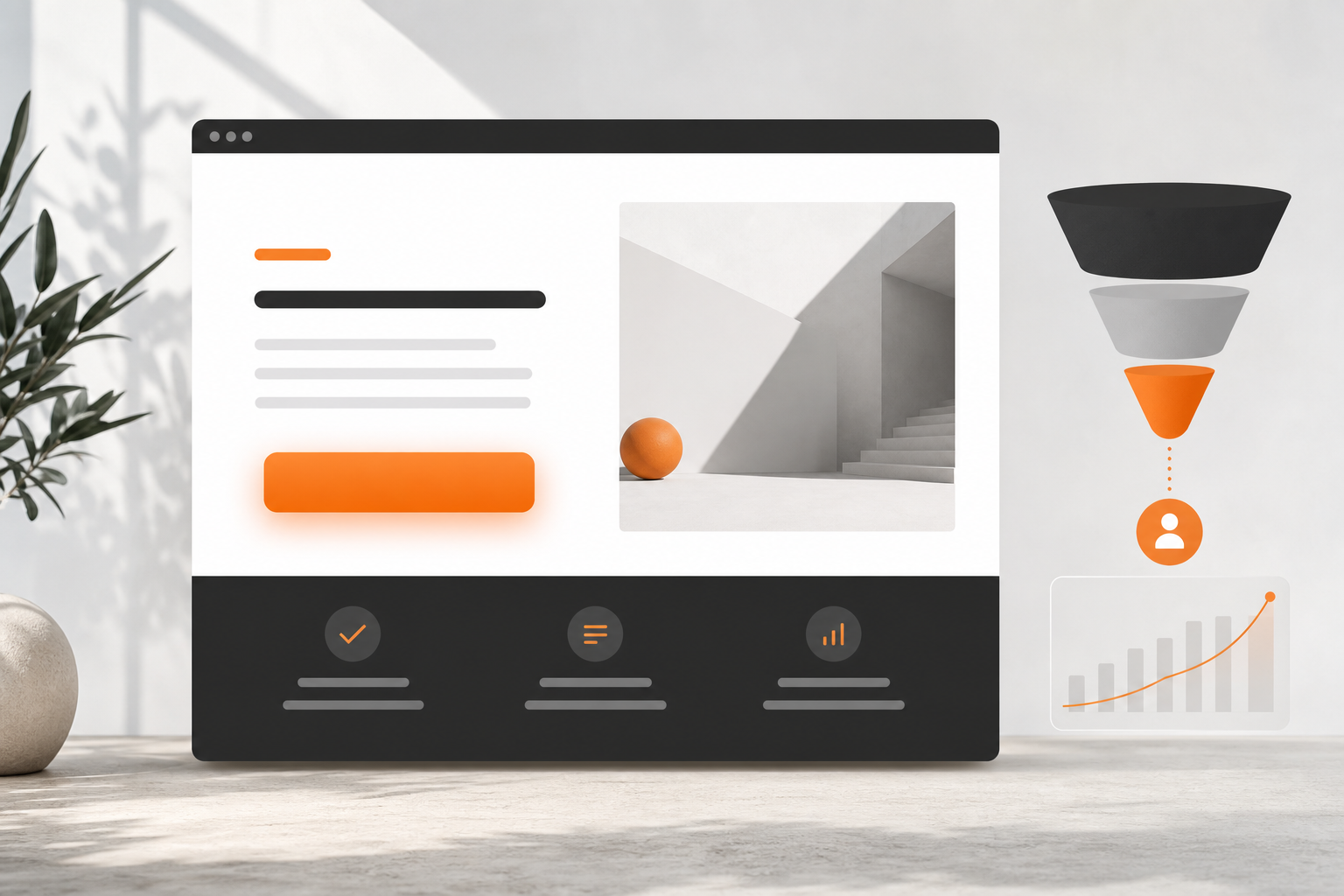
- Typical primary conversions include: lead form submitted, demo booked, free trial started, purchase completed, event/webinar registration.
- Important distinction: the conversion is the action; the conversion rate is how often it occurs, usually expressed as a percentage of total sessions or users.
Why this matters: when you treat every click as a “conversion,” optimization becomes noisy and you risk training ad platforms and teams toward low-intent behaviors. On a focused landing page, choose one primary conversion and keep everything else supportive.
Named tools you might use to define and track the action include Google Analytics 4 (GA4), Google Ads, Meta Ads, HubSpot, Salesforce, Shopify, Stripe, Calendly, Eventbrite, and Mailchimp.
Macro vs micro conversions on landing pages
- Macro conversions: the high-intent, revenue-linked action that defines success for the page.
- Micro conversions: helpful steps that indicate progress toward the macro, but are not success by themselves.
Lead generation (B2B or services)
- Macro: submit contact/qualification form, or book a demo via Calendly.
- Micro: click primary CTA, start form, reach step 2 of form, download a one-pager, watch 50% of explainer video.
SaaS trials and freemium
- Macro: start free trial, activate account.
- Micro: click “Get started,” choose a plan, complete email verification, connect first data source, finish onboarding checklist item 1.
Ecommerce and DTC
- Macro: purchase completed (Shopify/Stripe order success).
- Micro: add to cart, begin checkout, apply coupon, reach shipping step.
Events and webinars
- Macro: registration completed (Eventbrite/Mailchimp confirmation).
- Micro: click “Register,” select time zone, add-to-calendar, reminder email opened.
Tip: track a compact set of micro conversions to diagnose friction without diluting the macro signal.
Conversion vs conversion rate: don’t mix them up

- Conversion (noun): the defined action (e.g., “Demo booked”). One visitor may or may not convert.
- Conversion rate (metric): the percentage of visitors who convert over a period. For example, 72 conversions out of 1,200 sessions = 6% conversion rate.
- Rate math checks: always confirm numerators and denominators. Sessions vs users produce different rates; stick to one per dashboard to avoid confusion.
If you run paid traffic, align event naming between analytics and ad platforms so optimization models learn from the true macro event, not proxy clicks. For a practical guide to calmer measurement, see Google Ads Conversion Tracking Without Headaches.
How to pick the right primary conversion for your page
1) Start with business objective
- Revenue today (ecommerce) → purchase.
- Pipeline tomorrow (B2B) → qualified lead or demo booking.
- Product activation (SaaS) → trial started with minimum setup.
- Attendance (events) → registration complete.
2) Choose the highest-intent, feasible action
- Ask: “If this action increases by 20%, would we celebrate?” If yes, it’s probably the macro.
3) Minimize steps to completion
- Fewer fields and fewer screens tend to raise completion. Keep micro steps as diagnostics, not detours.
4) Ensure measurement fidelity
- Can you track the action deterministically (server-side receipt, thank-you page, webhook to CRM)? If not, fix measurement first.
5) Match traffic promise to page action
- The ad or email promise should make the macro action feel like a natural next step, not a bait-and-switch.
6) Define disqualifiers early
- For leads, add 1–2 qualifying questions to help Sales. A slightly lower volume with higher fit can grow pipeline efficiency.
7) Document the taxonomy
- Standardize event names across GA4, Google Ads/Meta, CRM (HubSpot/Salesforce). Example: “lp_demo_booked” as the macro; “lp_cta_click” as micro.
Measuring a landing page conversion correctly
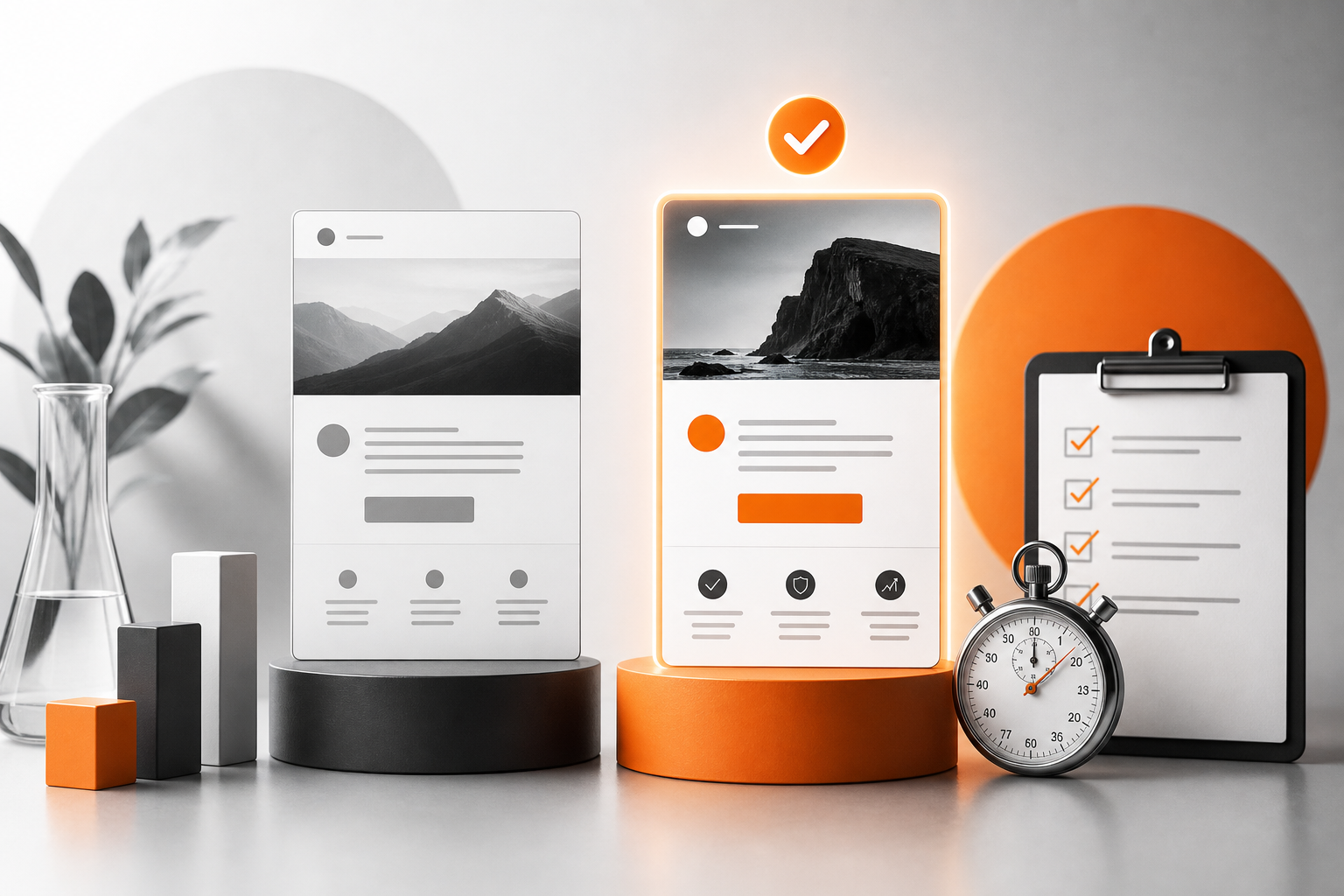
- Analytics setup
- GA4: configure the macro as a conversion event, with parameters like page_id and campaign_id for segmentation.
- Server validation: where possible, confirm conversions server-side (Shopify/Stripe order, backend trial creation, CRM lead created) and forward to GA4 or your CDP.
- Ad platform alignment
- Google Ads: import the macro conversion from GA4 or tag server-side; set it as “Primary” for bidding. Avoid optimizing for link clicks or view-page events.
- Meta Ads: use Conversion API plus pixel; map the macro event with value where relevant.
- CRM and pipeline
- HubSpot/Salesforce: create a lifecycle property that ties the landing page macro to opportunity creation, so you can learn which campaigns deliver qualified outcomes.
- Governance and QA
- Maintain a living event dictionary. Test every path weekly and on each deploy. Keep a clean sandbox to replicate flows.
If you manage paid social structure, pairing clean conversion signals with sensible budgets helps platforms learn faster. New to this? See the starter guide on ABO vs CBO in Meta Ads.
Ways to improve landing page conversion rate
- Tighten message–market match
- Mirror the traffic source promise in your headline and first paragraph. Remove generic jargon.
- One page, one job
- Present a single primary CTA consistently. Secondary links belong in the footer or confirmation email.
- Reduce form friction
- Ask only what you need to qualify or fulfill. Use progressive profiling after conversion.
- Show concrete proof
- Replace vague claims with named logos you’re allowed to display, short testimonials with specific outcomes, and screenshots of actual product UI. Avoid fabricated metrics.
- Clarify pricing and next steps
- If the macro is a trial, state duration, credit-card requirements, and what happens after.
- Speed and stability
- Largest Contentful Paint under 2.5s is a pragmatic goal. Compress images, defer nonessential scripts, and test on mobile networks.
- Social and email follow-up
- For micro conversions like form starts, use polite reminders where compliant. For trials, build activation nudges tied to first-value actions.
- Test what matters
- A/B test the headline, offer, and form length before button color. Run tests long enough to reach stable directionality, not just statistical noise.
Measurable checks that keep you honest
- Macro conversion rate (sessions or users—pick one and stick to it)
- Click-through rate to the primary CTA
- Form start-to-submit rate
- Checkout or signup step drop-off by step
- Page load times and error rates
- Cost per macro conversion by channel and campaign
Practical limitations to expect
- Attribution noise: cross-device and privacy controls reduce deterministic matching; trend direction over time is often more trustworthy than day-to-day swings.
- Sample size: small audiences yield volatile test results. Aggregate or extend test windows.
- Traffic quality: a perfect page cannot fix a mismatched audience or misleading ad. For broader context on controllable levers, read [On Page Vs Off Page SEO: What Writers Control](https://orangeandblackdigitals.com/blog/on-page-vs-off-page-seo-what-writers-control/).
- Platform incentives: automated bidding optimizes to the signal you feed it; teach it the macro event, not easy proxies.
Note: If your team runs complex, omnichannel campaigns, Topiclicks can help keep your planning and measurement coherent. Topiclicks is an agentic AI platform for omnichannel content planning and execution, built for brands and product teams focused on generating revenue and conversions. See how its workflows standardize goals and event naming across channels at topiclicks.com.
Concrete examples and how to track them
Use these realistic mappings to stay consistent across analytics, ads, and CRM.
- B2B lead gen demo page
- Macro: Demo booked (Calendly confirmation event). Track in GA4 as event “lp_demo_booked” with page_id, and import to Google Ads as Primary.
- Micros: CTA click “lp_cta_click,” form start “lp_form_start,” video 50% “lp_video_mid.”
- SaaS free trial page
- Macro: Trial started (backend account created). Server-side signal to GA4 and Meta via CAPI. Include plan tier as a parameter.
- Micros: Pricing click, email verified, first project created.
- Ecommerce product launch
- Macro: Purchase completed with value (Shopify order). Pass currency and value to GA4 and ad platforms.
- Micros: Add to cart, begin checkout, shipping info completed.
- Webinar registration
- Macro: Registration confirmed (ESP or Eventbrite webhook). Store UTM parameters to match registrants to campaigns.
- Micros: Register button click, date selected, add-to-calendar.
Pro tip: in GA4, mark only the macro as a conversion to simplify your primary KPI. Keep micros as events for funnel diagnostics.
Evidence-led callout: what really moves conversion
- Focus on offer strength and clarity over cosmetic tweaks. A clear, low-friction offer that fulfills the ad promise consistently outperforms clever copy with a weak value proposition.
- Validate with controlled experiments. When A/B testing isn’t feasible, use sequential testing with steady traffic and monitor for external shocks (seasonality, channel mix changes).
- Treat “best practices” as hypotheses. Keep a changelog. Correlate changes with trends in macro conversion rate, not just total leads or clicks.
- For paid acquisition, pair stable budgets with the macro event to let models learn. If you’re designing a broader roadmap of experiments and automation, the [2026 AI Marketing Roadmap](https://orangeandblackdigitals.com/blog/2026-ai-marketing-roadmap/) offers a useful planning lens.
How Orange & Black can help

Orange & Black
Quick glossary
- Macro conversion: the primary, high-intent action your landing page exists to drive.
- Micro conversion: a helpful step on the path to the macro, useful for diagnosis.
- Conversion rate: percentage of visitors who complete the macro during a set period.
- Measurement fidelity: how accurately your tools record the real-world action.
- Signal alignment: naming and weighting the same macro event across analytics and ad platforms.
Closing thought
When you stop debating what “counts” and choose one primary action, your copy tightens, your tests get faster, and your channels learn from the right signal. Define the macro, track it cleanly, and only then iterate to improve landing page conversion rate with intent-aligned experiments.
For fast, pragmatic setup of ad accounts that learn from real conversions, see the practical Google Ads Conversion Tracking Without Headaches and pair it with your creative structure using ABO vs CBO in Meta Ads. For planning beyond one page, the 90-Day AI Marketing Roadmap 2026 can help you sequence experiments without analysis paralysis.
Common questions
Frequently asked questions
What is a landing page conversion versus a conversion rate?
A landing page conversion is the specific action your page is built to drive, like a purchase or demo booking. The conversion rate is the percentage of visitors who completed that action during a defined period.
How do I choose the right conversion for my landing page?
Start with your business objective, select the highest-intent feasible action (purchase, trial, demo, registration), ensure you can track it accurately, and align the ad or email promise so the action is the natural next step.
What are examples of micro conversions on a landing page?
Micro conversions are steps toward the main goal, such as clicking the primary CTA, starting a form, adding to cart, viewing 50% of a video, or reaching step two of checkout. They diagnose friction but are not success by themselves.
How can I improve landing page conversion rate quickly?
Tighten the headline to match traffic intent, make one primary CTA, reduce form fields, add concrete proof, clarify pricing and next steps, improve load speed, and A/B test the offer and form length before cosmetic tweaks.